DocumentSelection guide
TechnologiesDMR · TETRA · broadband
ManufacturerMotorola Solutions
Reading time5 minutes
Selection guide · before you commit

DMR, TETRA or broadband?

Three ways to keep your teams communicating, for different constraints and budgets. This guide helps you recognise yours; the coverage survey then settles it.

§ 1 · The three families

What each technology does best.

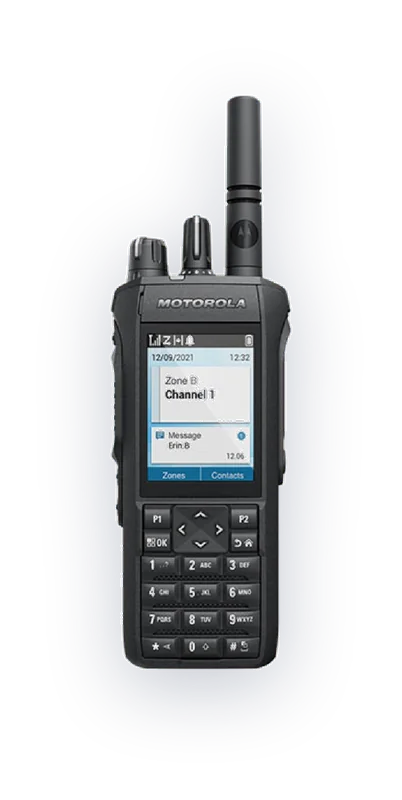
MOTOTRBO R7 handheld 01 · DMR · MOTOTRBO

Your private radio network

You own your network: radios communicate directly or through your own SLR repeaters. Simple, robust, no subscription.

Ideal for
Factories, ports, warehouses, hotels, vehicle fleets
Range
One site, or several sites linked over IP
Strength
Controlled cost of ownership, no subscription
See DMR handhelds
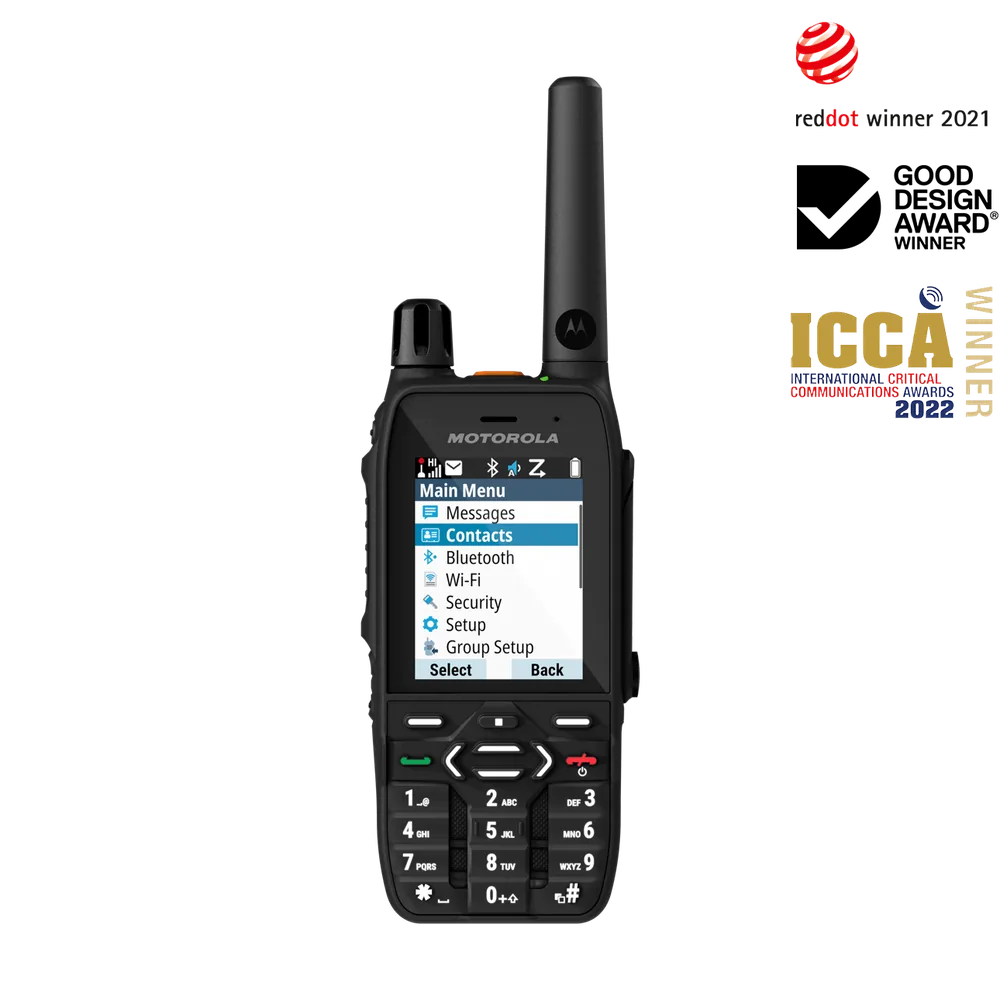
TETRA MXP600 handheld 02 · TETRA · DIMETRA

The mission-critical network

The standard for large-scale critical communications: priority calls, end-to-end encryption, several organisations on the same redundant network.

Ideal for
Public safety, emergency services, airports, energy
Range
Regional to national, with dedicated base stations
Strength
Redundancy, call pre-emption, standardised encryption
See TETRA terminals
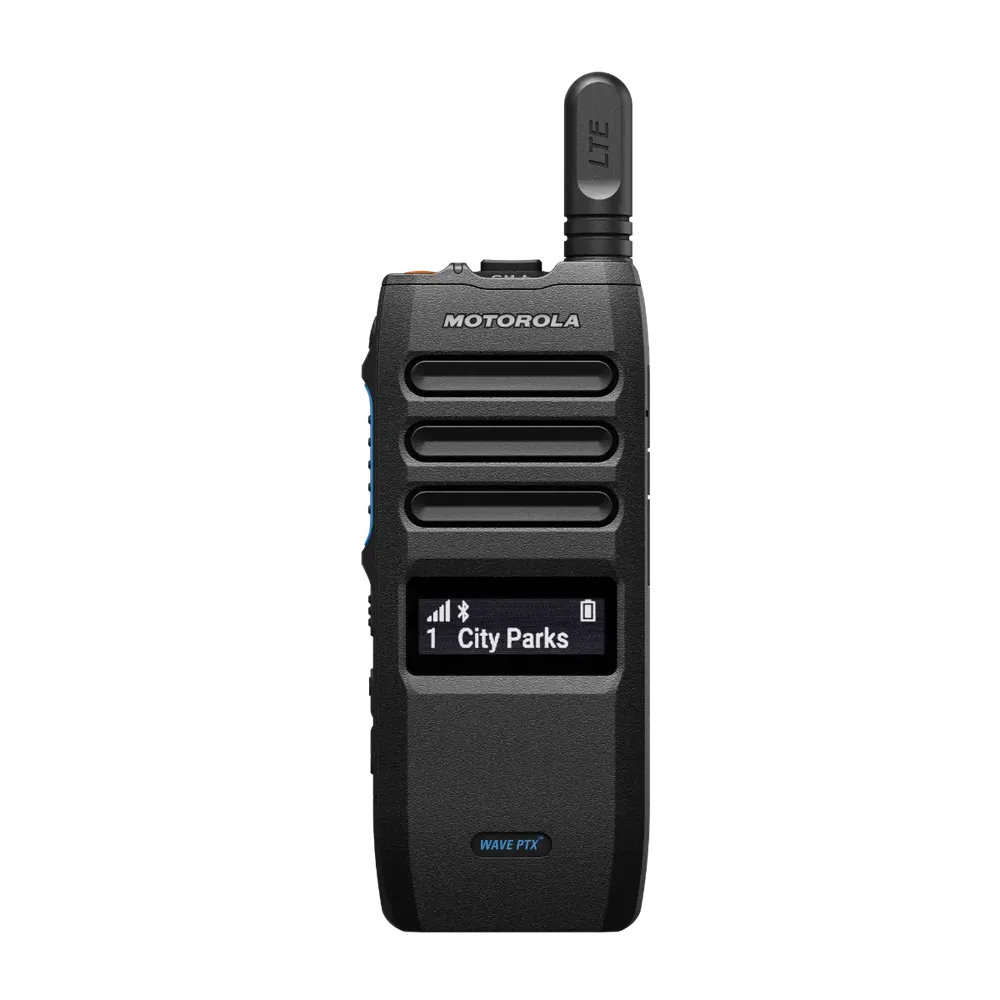
WAVE PTX TLK 110 handheld 03 · BROADBAND · WAVE PTX

Push-to-talk over 4G

Your teams can talk wherever there is 4G or Wi-Fi, with no repeaters to install and no frequencies to apply for. Voice, messages, photos and location.

Ideal for
Logistics, transport, private security, mobile teams
Range
National, wherever operators provide coverage
Strength
No infrastructure, fast commissioning
See broadband
§ 2 · The most frequent question

DMR or TETRA: which one do you need?

Both are digital, reliable and professional. The difference lies in scale, criticality and the number of organisations sharing the network.

You are equipping a private organisation

DMR is enough, and costs less

  • Coordinating technical, security or production teams on one or more sites.
  • A one-off purchase, with no monthly subscription.
  • Rapid deployment with one or a few SLR repeaters.
You run a vital service

TETRA is the clear choice

  • Emergency services, security, a major airport, an energy network: an outage can have life-threatening consequences.
  • Redundant architecture and absolute priority for emergency calls.
  • Several thousand users and several organisations on the same network.

Our rule: do not oversize if DMR is enough for your site, and do not entrust a critical operation to consumer 4G alone.

Where each technology lives

The spectrum, drawn.

Each technology occupies its own frequency band, with its own licence. That is why a DMR terminal cannot talk to a TETRA network, and why broadband relies on an operator’s network rather than private frequencies.

How to obtain an ARTCI frequency licence

Position of the DMR (VHF and UHF), TETRA (380 to 430 MHz) and LTE 800 bands on the frequency axis from 100 to 900 MHz DMR · VHF 136–174 · UHF 400–470 TETRA · 380–430 MHz BROADBAND · LTE 800 100300500700900 MHz
Fig. — Typical bands, for guidance only. Exact frequencies are assigned by ARTCI.
§ 3 · Comparison

The three technologies, criterion by criterion.

Benchmarks to guide your choice. Each project is sized by the coverage survey.

CriterionDMR · MOTOTRBOTETRA · DIMETRABroadband · WAVE PTX
Ideal forIndustrial sites, fleets, hospitalityPublic safety, emergency services, airports, energyNational mobile teams, transport, logistics
RangeOne site or several sites linked over IPRegional to nationalNational, depending on operator coverage
UsersDozens to several hundred per siteThousandsDepending on the number of subscriptions
InfrastructureSLR repeaters (1000, 5500, 8000) and, beyond that, Capacity MaxNetwork core and base stations (DIMETRA Express, X Core, MTS)None: existing mobile or Wi-Fi network
ARTCI licenceYes, we prepare the applicationYesNo, the network of an already licensed operator
SecurityBasic and enhanced privacy; AES-256 depending on model and licenceTEA1/2/3 air interface encryption and end-to-end encryptionAES-256 encryption of data streams
Priority in a crisisGood, on your own channelsMaximum: standardised pre-emption and queuingDepends on the operator’s network
Lead timeShort, depending on ARTCI authorisation and supplyLong: an infrastructure projectShortest: subscription activation
Cost structureMainly purchase, no subscriptionSignificant infrastructure investmentLittle purchase, subscription per user
Examples R7 · R5 · Ion · SLR 5500 MXP600 · MXP660 · MTP8550Ex · DIMETRA Express TLK 110 · TLK 150 · LEX L30 · WAVE PTX
§ 5 · Short answers

If you are in a hurry.

What is the difference between a DMR network and a TETRA network?

DMR (ETSI TS 102 361 standard, MOTOTRBO range) is an economical and robust private digital radio, for coordinating teams on a site or a fleet. You own your network.

TETRA (ETSI standard, DIMETRA systems) is designed for large-scale critical communications: priority calls, end-to-end encryption, several thousand users.

What is broadband in radio communication?

Push-to-talk over 4G (WAVE PTX) turns a rugged terminal or a smartphone into a radio with national reach, on the operators’ networks.

No licence or infrastructure to deploy, but you depend on the operator’s coverage: where there is no network, there is no communication.

Do these three technologies require a frequency licence?

For DMR and TETRA, yes: the use of frequencies is subject to authorisation by ARTCI. We prepare the application on your behalf.

For broadband, no: you use the network of an already licensed operator.

Can several technologies coexist?

Yes, and it is common. A site equipped with DMR can extend communication to its mobile teams via WAVE PTX, with the two linked by a gateway.

The architecture depends on who needs to talk to whom: that is what the scoping phase settles, before the coverage survey. See our approach.

Still unsure?

The coverage survey settles it.

Our Motorola Solutions-certified engineers, based in Abidjan, simulate coverage on your terrain and guide you towards the right technology.